
Mountain-Forecast.com
Meteo365 Ltd.Weather
4.845.00 Reviews
- Version
- 4.1.1
- Installs
- 100.00K
- Age Rating
- Everyone
Screenshots
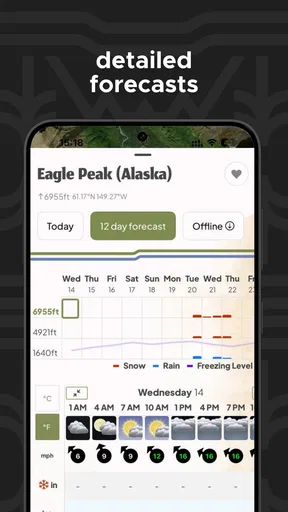
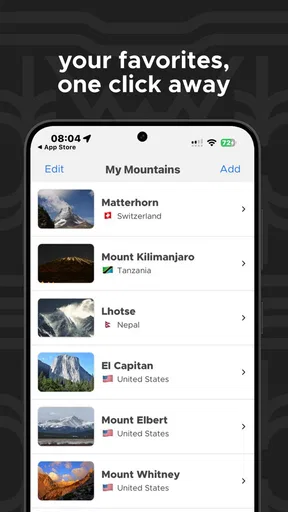
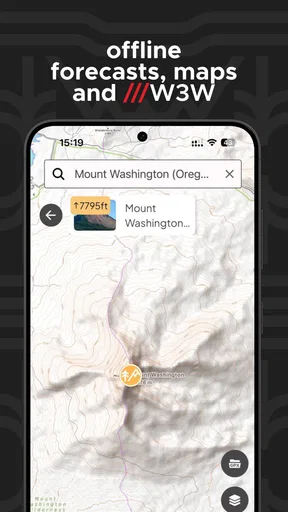

Our Review of Mountain-Forecast.com
 Analysis by Appyee
If you’re anything like me, planning a mountain adventure often means navigating through a labyrinth of weather apps, trying to figure out what Mother Nature has in store. Enter Mountain-Forecast.com, an app that’s become a go-to resource for mountain weather enthusiasts. Let me take you through my experience with it and why it might just become your new favorite app.
Why a Mountain-Specific Forecast Matters
A general weather app can be perfectly useful for deciding whether to carry an umbrella around town, but a mountain outing asks different questions. Conditions at a trailhead may not tell you what to expect higher up, and a reassuring forecast for the nearest town can leave important terrain-related changes out of the picture. The central appeal here is focus: Meteo365 Ltd. built this weather app around forecasts for peaks, rather than treating mountains as ordinary map pins.
That distinction is most useful when I’m planning a route with a meaningful change in elevation. I can use a peak forecast to think beyond the temperature where I start: what might the wind feel like farther up, and how could conditions differ as the terrain rises? It doesn’t replace local knowledge or a careful decision on the day, but it gives me a more relevant starting point than a broad regional forecast.
The app is free to install and is rated for Everyone, so it’s easy to try without making a purchase decision first. The audience is much narrower than “anyone who checks the weather,” though. If mountains are only an occasional backdrop to your plans, the extra focus may not add much to your routine. If you regularly hike, climb, ski, or simply choose outings around particular peaks, the specialized approach has a clearer purpose.
Getting Started with Mountain-Forecast.com
First things first, downloading the app was a breeze. Available for both Android and iOS, it installed without a hitch and didn’t demand any bizarre permissions. Upon opening it, I was greeted with a sleek and intuitive interface that immediately made me feel like I was in the right place.
Features That Stand Out
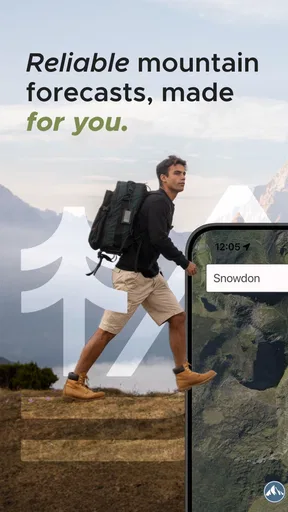
What makes this app a standout is its focus on providing detailed weather forecasts specifically tailored for mountain regions. This is a game-changer for hikers, climbers, and all outdoor enthusiasts who depend on precise weather predictions.
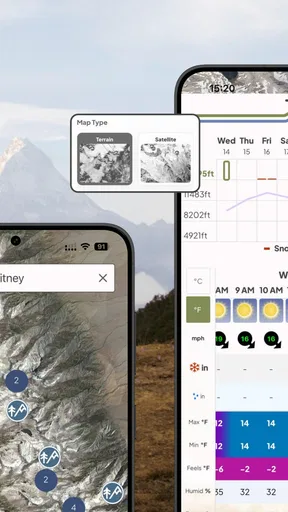
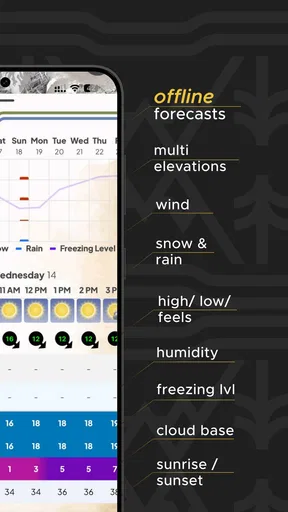
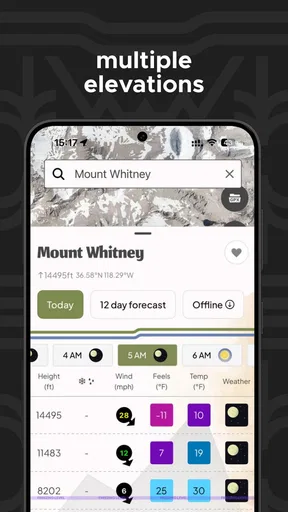
- Detailed Forecasts: This app doesn’t just stop at the basics. It offers comprehensive weather data, including temperature, wind speed, and snow conditions at various altitudes.
- Interactive Maps: The interactive map feature is pure gold. It’s easy to navigate, and you can zoom in to get detailed forecasts for your specific mountain of interest.
- Global Coverage: Whether you’re planning a hike in the Rockies or an expedition in the Himalayas, Mountain-Forecast.com has got you covered with its global reach.
- User-Friendly Interface: The design is clean, and the navigation is straightforward, making it a joy to use even for those who aren’t tech-savvy.
The peak-based setup changes how I use a forecast. Rather than picking the nearest town and assuming it represents the whole outing, I look for the mountain that anchors my plan, then consider how the conditions might vary with altitude. That’s a useful habit even before I compare the numbers: it encourages me to ask whether the forecast location actually matches the route I intend to take.
A practical tip is to check more than one relevant peak when your route crosses a broad or exposed area. A forecast for the summit is useful context, but it may not describe every sheltered valley, ridge, or approach. I treat the selected mountain as a planning reference, not a guarantee that every point on the trail will experience identical weather. That distinction matters most when a route is long enough to pass through noticeably different terrain.
The app’s stated coverage spans over 11,000 peaks, which gives it a useful reach for people who travel or plan trips outside their familiar local area. I would still search carefully for the exact mountain rather than settle on a nearby one simply because it appears first. A close match in name or geography is not necessarily a close match in elevation or exposure, and those details can affect how useful a forecast feels for a specific outing.
Using the App in Real Life
I tested the app on a recent weekend hike up to Mount Baldy. The forecast was spot-on, predicting a chilly morning that would gradually warm up. Sure enough, I layered up accordingly and had a comfortable hike. The app’s accuracy in predicting wind conditions was particularly impressive, allowing me to avoid potentially dangerous gusts at higher altitudes.
Another cool feature I discovered is the ability to save favorite locations. This came in handy for me, as I frequently visit a few local peaks. With just a tap, I can pull up detailed weather data for all my go-to spots.
Favorites are especially handy when a decision needs to be made before leaving home. I can keep the peaks I actually visit close at hand, compare the outlook for my usual options, and choose a plan that fits the day instead of repeating the same search from scratch. For a weekend hiker with a small set of familiar routes, that simple preparation can be more useful than browsing a large map every time.
Here’s a realistic use case: I’m considering a morning hike, but the forecast at the trailhead looks comfortable while the summit forecast suggests a colder, windier outing. I can use that difference to rethink my layers, adjust how ambitious the route should be, or choose a lower peak. The app helps me frame those choices; I still need to check conditions close to departure and carry suitable equipment. A forecast is a planning aid, not permission to ignore changing weather.
For a trip to unfamiliar mountains, I’d use the app before the journey as a way to identify likely forecast locations and get a feel for the conditions associated with the peaks on my shortlist. I would not wait until reaching a remote trail to do all my research. Checking in advance gives me time to compare routes and reconsider plans, while the actual mountain day still calls for sound judgement and awareness of what I encounter outside.
Where It Fits Among Weather Apps
The usual phone weather app is often faster for a broad question such as whether rain is expected in the city or what to wear for errands. Its strength is convenience and general coverage. A mountain-focused forecast serves a different job: it gives a peak a more central place in the planning process and makes altitude-related conditions more relevant to the question I’m asking.
I wouldn’t necessarily replace a general weather app with this one. For everyday forecasts in town, a familiar local service may be quicker and easier. For a mountain outing, I’d rather consult a tool built around peaks, then use my usual sources as additional context if needed. This is a better fit as a specialist in my weather toolkit than as a single answer for every location and activity.
It also isn’t a substitute for route planning, navigation, or current on-the-ground judgement. Someone who needs a map primarily to follow a trail, or who wants an all-in-one outdoor planning workflow, may prefer a dedicated mapping tool and use this app just for the weather question. Its value is clearest when the forecast itself is the problem to solve: choosing a peak, comparing mountain conditions, or preparing for a change in elevation.
The developer, Meteo365 Ltd., has kept the focus on mountain forecasts rather than trying to turn the app into a general outdoor companion. I find that specialization appealing, but it also means I’d pair it with other tools if I needed trail directions, route details, or a broader trip-planning setup. The right combination depends on what I’m doing; no single weather screen can make every mountain decision for me.
What’s the Catch?
Every app has its quirks, and this one is no exception. While it does a fantastic job at providing detailed forecasts, I noticed that the app can be a bit sluggish when loading the interactive maps. It’s not a deal-breaker, but it’s something to be aware of if you’re in a hurry.
That delay changes how I’d use the map: I’d browse and identify locations while I have a reliable connection and enough time, rather than leave the first search until I’m about to set off. If the map is taking a while, it can interrupt the quick “check and go” habit that makes ordinary weather apps feel effortless. The saved-location option helps once the relevant peaks are in place, but it doesn’t make map loading itself faster.
Also, while the app is free, there are ads that can pop up at times. It’s a minor inconvenience, but if you’re someone who prefers an ad-free experience, you might find it a tad annoying. There’s an option to upgrade to a premium version to remove ads, which is worth considering if you use the app frequently.
There are in-app purchases priced from $3.99 to $24.99 per item, so I’d start with the free version and see how often I use it before spending anything. Occasional hikers may find the free experience sufficient for checking a planned outing, while someone who returns to mountain forecasts regularly may care more about removing interruptions. I wouldn’t treat an upgrade as necessary just because it exists; it makes sense only if the app has earned a regular place in your routine.
Another limitation is one shared by any forecast: conditions can change, and a forecast for a peak cannot describe every moment or every section of a route. I use the information to prepare and compare options, not to make a safety decision on autopilot. If the weather looks uncertain, the sensible response may be to alter the route or stay off the mountain, regardless of how convenient the app makes it to check a forecast.
Who Should Keep It on Their Phone?
I’d recommend it most readily to hikers and climbers who return to particular peaks, people who plan outings across different elevations, and travelers who want a mountain-specific forecast before they commit to a route. Its 4.8 average from around 960 ratings suggests that many users value the experience, while its 50,000-plus installs show that it has found a real audience without being a mass-market weather app. Those figures are useful context, but my own reason to keep it would be the peak-centred focus and the ability to save familiar locations.
It is less compelling for someone who checks weather only to decide whether to walk to work, wants a fast forecast for a city, or expects one app to handle every part of an outdoor trip. In those cases, a general weather service or a dedicated navigation tool may be more practical. I’d also be cautious about relying on it as the sole basis for a high-consequence outing: use the forecast as one input, and make decisions with the route, conditions, and your own experience in mind.
The app is currently at version 3.0.1 and supports Android 6.0 or later. That gives Android users on older compatible devices a clear baseline to check before installing. On either platform, the most useful first step is to search for the exact peaks you care about, save the ones you revisit, and see whether the forecast presentation suits the way you plan. That quick trial tells you more about its fit than browsing a long list of features.
The Final Word
Overall, Mountain-Forecast.com is a must-have tool for anyone who spends time in the mountains. Its detailed forecasts and user-friendly interface make it a reliable companion for planning safe and enjoyable outdoor adventures. Whether you’re a seasoned mountaineer or a weekend hiker, this app is definitely worth a download.
My recommendation comes with a distinction: I’d keep it for mountain days, but I wouldn’t expect it to replace every weather or outdoor app on my phone. Its strongest case is when I need to think about a specific peak and conditions at different elevations. If I rarely leave town, that specialization may feel unnecessary; if I regularly plan mountain outings, it can make the weather check more relevant.
So, if you’re planning your next mountain escapade, give Mountain-Forecast.com a try. It might just become your new best friend in the wild. You can find the download links for both Android and iOS on our website. Happy hiking!
Verdict
Strengths of Mountain-Forecast.com
- Detailed mountain weather forecasts
- Covers multiple global locations
- User-friendly interface
- Regularly updated data
- Free to access basic features
Limitations of Mountain-Forecast.com
- Limited offline functionality
- Ads can be intrusive
- Premium features require subscription
- Occasional loading delays
- Limited social sharing options
Other Releases by Meteo365 Ltd.
View All
Surf-Forecast.com
Weather4.6

Snow-Forecast.com Weather Maps
Weather4.8
Similar Picks in This Category
View All
Weather - By Xiaomi
Xiaomi Inc.4.1

Weather & Radar Forecast
WetterOnline4.8

Weather
OneLouder Apps4.6

AccuWeather: Weather Radar
AccuWeather3.6

The Weather Channel - Radar
The Weather Channel4.6

1Weather Forecasts & Radar
OneLouder Apps4.3
Frequently Asked Questions
What is Mountain-Forecast.com and how can it help me?
Mountain-Forecast.com is a specialized weather forecasting app designed for mountaineers, hikers, and outdoor enthusiasts. It provides detailed weather predictions for over 11,000 mountains worldwide. The app helps users plan their trips by offering forecasts for different elevations, ensuring a safer and more informed outdoor experience.
How accurate are the weather forecasts provided by Mountain-Forecast.com?
Mountain-Forecast.com offers highly accurate weather forecasts, utilizing data from reliable meteorological sources. The app provides forecasts for different elevations, which are crucial for understanding weather variations on a mountain. However, like all weather predictions, it is advisable to use the app as a guide and check local conditions before heading out.
Is Mountain-Forecast.com available for both Android and iOS devices?
Yes, Mountain-Forecast.com is available for both Android and iOS platforms. Users can download the app from Google Play Store or Apple App Store. The app is designed to offer a user-friendly interface, ensuring easy navigation and access to weather forecasts and mountain data on both types of devices.
Does Mountain-Forecast.com offer any offline features?
While Mountain-Forecast.com primarily relies on internet connectivity to provide up-to-date weather forecasts, it does allow users to save specific forecasts for offline access. This is particularly useful when traveling to remote areas with limited internet access, helping users stay informed about weather conditions at their destination.
Are there any costs associated with using Mountain-Forecast.com?
Mountain-Forecast.com offers a free version with basic features and access to a wide range of mountain forecasts. For users looking for more detailed information and additional features, there may be a premium version available at a cost. It's recommended to check the app store for the latest pricing and feature details.
